


Abundant Manufacturing
Our food and material systems depend on resource-intensive production and fragile supply chains, both of which are increasingly vulnerable to a volatile climate. We have an opportunity to produce a sustainable abundance of food and materials with greater speed, precision and flexibility.
Programme development
As we develop a new programme in the Abundant Manufacturing opportunity space, we’re sharing our current thinking in the form of a programme thesis. Subject to approval, we aim to open concept paper submissions in early 2027.
Forecasting Evolution
Evolution decides whether a herbicide clears a weed from a field or leaves a resistant population to spread. It decides whether a tumour responds to treatment or escapes it, and whether staple crops can keep pace with a changing climate.
Sometimes we need evolution to succeed; other times we need it to fail. Yet evolutionary biology remains an explanatory science. It can explain why a population became what it is, but struggles to say what will happen next. Decisions across agriculture, medicine, biotechnology and conservation are made without the answer to a crucial question: will a population adapt and survive, or will it collapse?
Imagine if we could forecast evolutionary outcomes early enough to act. Evolution would stop being a force we react to and become one we work with, transforming how we grow food, treat disease and protect wild populations.
We believe that three developments make a new approach possible:
Sequencing is now cheap enough to measure genetic make-up and gene activity repeatedly, across thousands of populations;
Automation can run controlled evolution experiments at a scale no lab could previously attempt;
Modern machine learning can find structure in datasets too large and noisy for conventional analysis.
This programme will set out to test whether evolution can be forecast reliably, with quantified uncertainty, and early enough to act. We propose achieving this by building the first large, open record of evolution in action, through massively replicated experiments in the nematode worm Caenorhabditis remanei. Teams will compete in open, blind challenges to forecast which populations adapt fast enough to survive, which collapse and when, and how their genetic make-up shifts.
If successful, this programme will give breeders, clinicians, regulators and conservation bodies the equivalent of a weather forecast for evolution: time to act before resistance, collapse or escape, rather than after.
We want to hear from individuals with relevant expertise to provide constructive input, stress-test our thinking, and push our ambition even further. That includes experimental evolution and quantitative genetics, lab automation, machine learning and forecasting, and practitioners in agriculture, medicine, conservation and biosecurity. We'd also like to hear from organisations that could contribute compute, sequencing capacity, or genomic time series from real-world systems.
Read the programme thesis Share your thoughts and register interest in a workshop
Meet the programme team
Our Programme Directors are supported by a core team that provides a blend of operational coordination and highly specialised technical expertise.

Yannick Wurm
Programme Director
Yannick joins ARIA from Queen Mary University of London, where he is Professor of Evolutionary Genomics & Bioinformatics. Yannick pioneered the use of molecular tools to assess pollinator health, has built startups to commercialise genome analysis software, and created a real-time network for pollinator monitoring.

Alex Smith
Programme Specialist
Alex is a project management professional with experience in complex transformations. He recently streamlined national public service infrastructure for the Nursing and Midwifery Council and has led strategic initiatives at the London School of Economics, including delivering programmes, establishing governance and replacing legacy systems. Alex supports ARIA as an operating partner from Pace.

Simon Evans
Science + Technology Lead
As an evolutionary ecologist with a PhD from Oxford, Simon spent nearly 20 years studying contemporary evolution of wild animals, using long-term studies of nestbox-breeding birds. Before joining ARIA, he studied the evolutionary trade-off between reproduction and survival, showing via experimental selection that this imposes an unbreakable limit to adaptation.
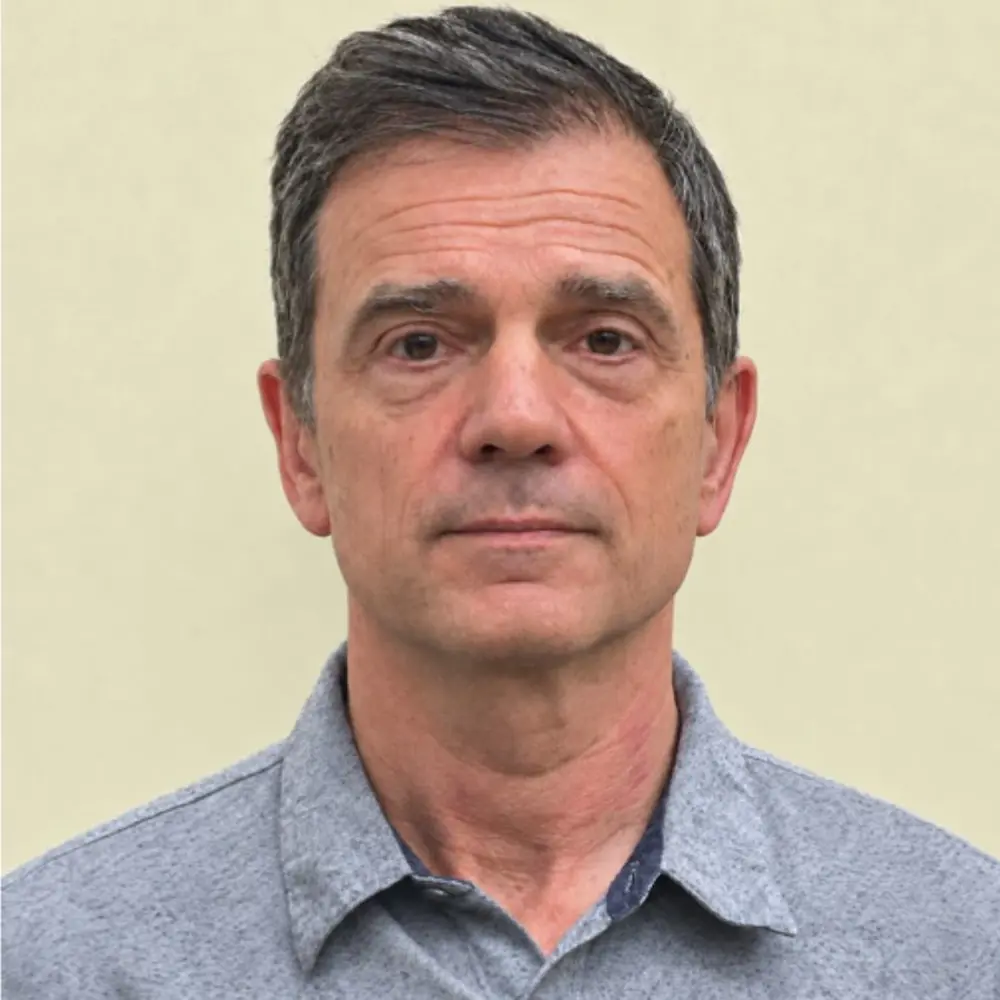
Richard Nicols
Science Contractor
Richard Nichols is Professor of Evolutionary Genetics at Queen Mary University of London. He combines genomics, statistics and experiments to understand evolution. He co-developed the Balding–Nichols model for forensic DNA analysis and the Beaumont–Nichols test for natural selection, and co-led recent research on evolving resistance to ash dieback and mathematical models of cancer drug resistance.