


Forecasting Tipping Points
Backed by £114m, this programme sits within the Resilient Climate and Ecosystems opportunity space and aims to enhance our climate change response by developing an early warning system for tipping points.
Programme expansion
Since launching in 2025, this programme has supported major improvements in our understanding of the science of climate tipping points and the technology required to observe them. This work has revealed both the scientific need and end-user demand to deliver a functional end-to-end early warning system minimum viable product by 2030. To reflect this accelerated ambition, the programme has received additional funding and is now backed by £114 million in order to achieve this goal.
Our goal
Climate tipping points are potentially abrupt, self-reinforcing shifts in the Earth system that could have profound consequences for human and ecological systems. Despite the potential impact of crossing these tipping points, we’re poorly equipped to characterise the long-term trends of our climate systems and predict the future risk of self-perpetuating change.
This programme aims to create a sustained, public-good early warning system for climate tipping points that equips the world with the information we need to build resilience by accelerating proactive climate mitigation and adaptation.
We’re focusing our efforts on the North Atlantic subpolar gyre – an under-observed ocean system whose state influences regional climate, marine ecosystems, and the wider Atlantic Meridional Overturning Circulation (AMOC). Its close coupling with freshwater input from Greenland and the prospect that its tipping point could be crossed on decision-relevant timescales – in decades, not centuries – makes it a strong test case for whether calibrated observations and models can provide trustworthy early warning.
By integrating data from low-cost sensing systems deployed in an adaptive observing network, with advanced physics- and AI-driven prediction models, we will build an ethical and equitable early warning system minimum viable product that warns of changes in the subpolar gyre to equip end-users with decision-useful information.
Read the programme thesis (English)
Read the programme thesis (Kalaallisut)
Read the accessible version of the programme thesis
*This page will be available in Greenlandic soon.
Forecasting Tipping Points Phase 2: call for concept papers
The programme is entering its second phase, building on understanding of the science of climate tipping points towards a usable early warning system for the North Atlantic.
We are now inviting concept papers from teams who can support this goal, particularly related to ocean observing, interannual-to-decadal forecasting, and decision-focussed climate-evidence translation; we’re also keen to hear from prospective users, partners, and co-funders who could help build a lasting capability.
Concept paper deadline: 9 October 2026
Explore the funded projects
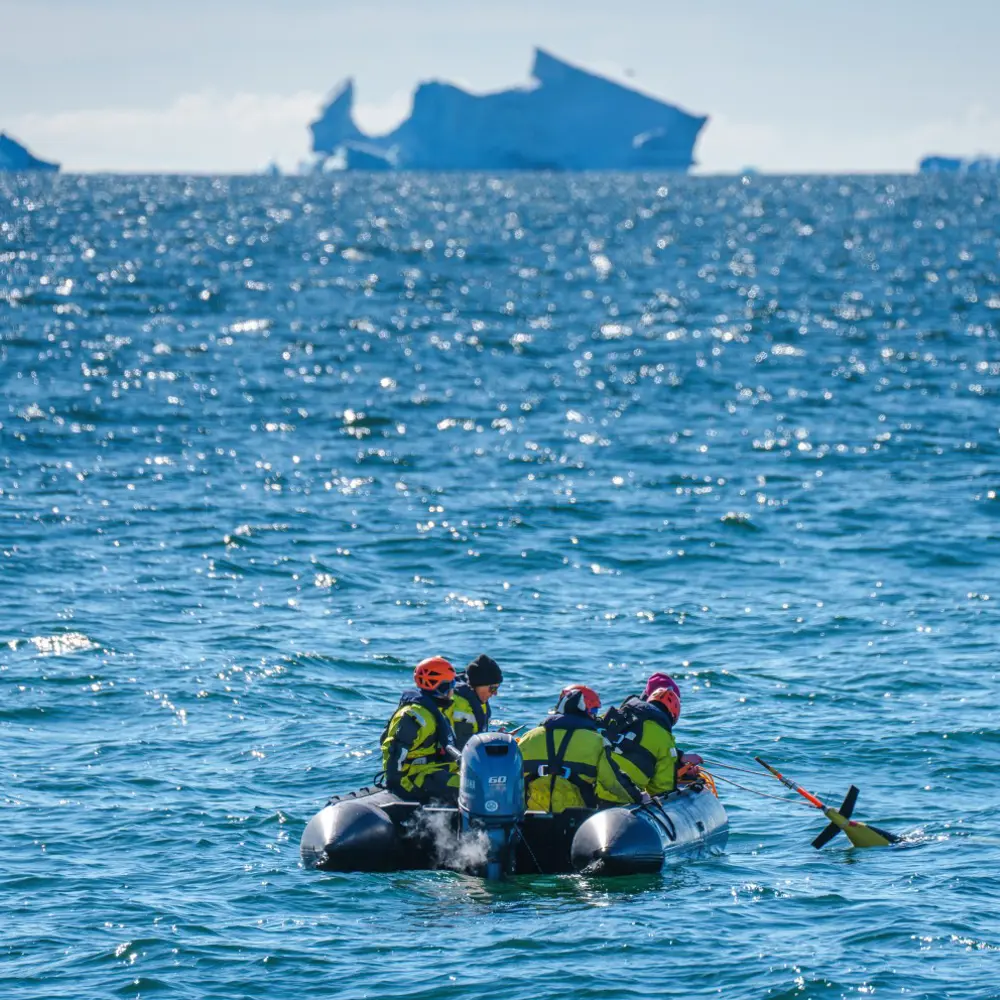
We’re bringing together teams of experts in climate science, optics, computer science, mathematics, statistics, and nuclear physics – spanning startups, academia, and non-profit R&D organisations – to define and detect the earliest signs of climate tipping points.
Accelerating towards impact
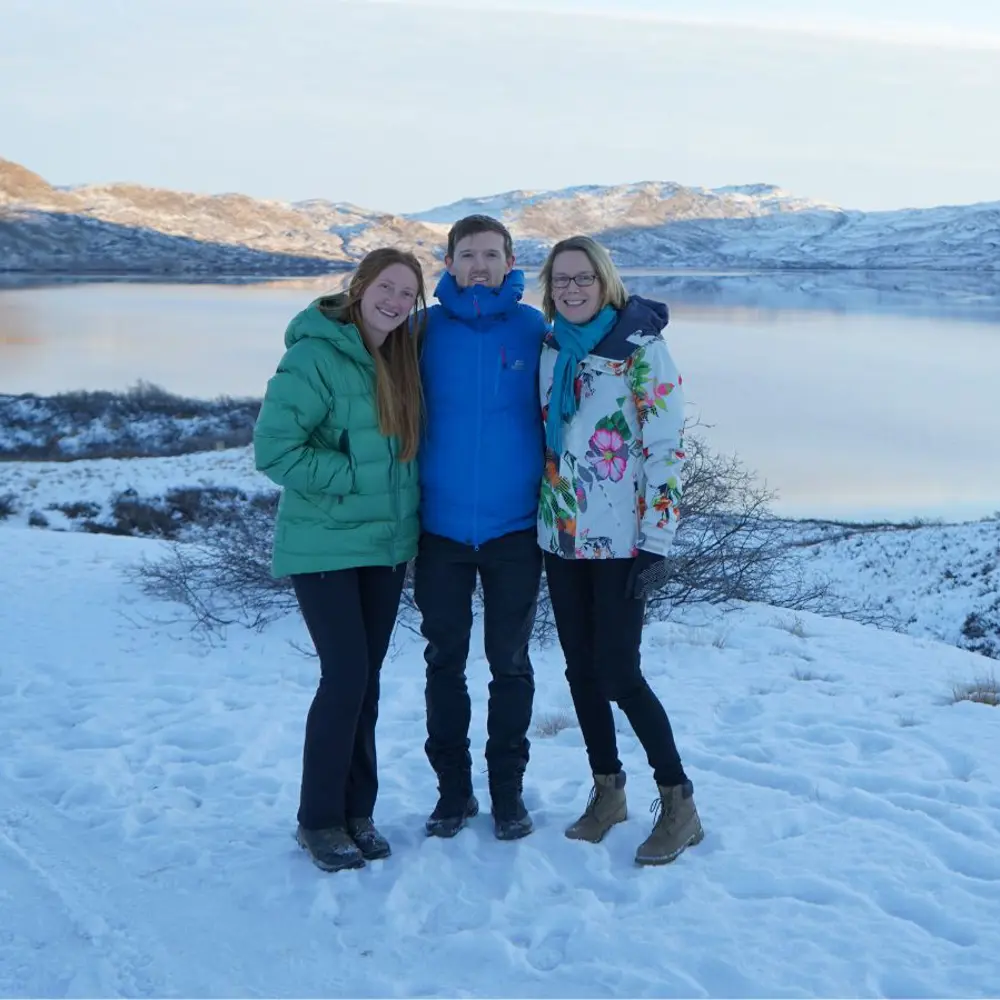
Explore the ways we’re laying the groundwork for the future sustainability and impact of the programme, including ensuring the data that underpins a future early warning system is trustworthy, engaging with decision-makers to understand what they would need from an early warning system, and building a research ecosystem that is as resilient as the systems we hope to protect.
Meet the programme team
Our Programme Directors are supported by a core team that provides a blend of operational coordination and highly specialised technical expertise.

Gemma Bale + Sarah Bohndiek
Programme Directors
Gemma Bale and Sarah Bohndiek are biomedical physicists working as co-Programme Directors. They both joined ARIA from the University of Cambridge, where Gemma continues to lead teams working on non-invasive brain monitoring, and Sarah in optical imaging technology for earlier cancer detection.

Jess Humphreys
Programme Specialist
Prior to working with ARIA, Jess built a career innovating clinical trial management at tech SMEs, where she led teams developing interactive response technology platforms to streamline trial processes, and oversaw global data management and quality control at neuroimaging facilities. Jess supports ARIA as an operating partner from Pace.

Dan Giles
Science + Technology Lead
Dan has a diverse academic background in applied mathematics, statistics, and computer science, with a focus on developing and enhancing ocean and atmospheric models. He is an Honorary Associate Professor in the AI Centre at University College London, where his research focuses on the intersection of machine learning for weather and climate science.

Annys Rogerson
Programme Support
Annys joins ARIA from a background in government AI and data strategy consulting, where she designed programmes for public-private data sharing and built digital products for UK government services in agile software teams. She holds a Master in Public Policy from the Hertie School of Governance, Berlin, and a first-class degree from UCL. Annys supports ARIA as an operating partner from Pace.

Axel Ingemann-Jeremiassen
Ataqatigiissaarisoq | Connector and Coordinator
Axel is a historian from Greenland. A former teacher, he completed a MA-degree in Arctic Culture and Social History at Ilisimatusarfik, University of Greenland. He among other things stands for liaison between local Greenlanders and scientists from the UK to manage relationships between stakeholders, government bodies, and local organisations to ensure project alignment with national interests.

Angunguak Jepsen
Oversight Committee Secretary
Angunguak is based in Nuuk. He holds a Master’s degree in Mineral Exploration and Mining Geology from Curtin University and has a professional background spanning geology, construction, and infrastructure in Greenland.
Featured insights

Inside the GIANT expedition
GIANT Greenland
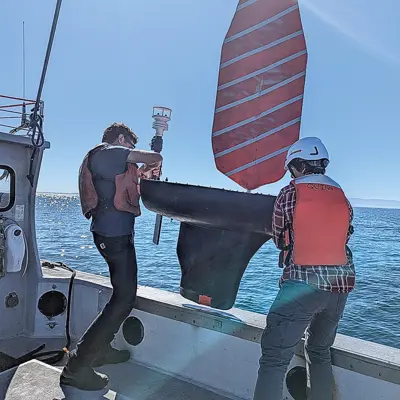
Investigating how the melting of Greenland’s ice sheet leads to Atlantic climate tipping points.



Sign up for programme updates
Receive the latest updates from this programme, including funding opportunities, programme developments, events, activities and ways to get involved.